1. Clean Dust off the Scratched Surface
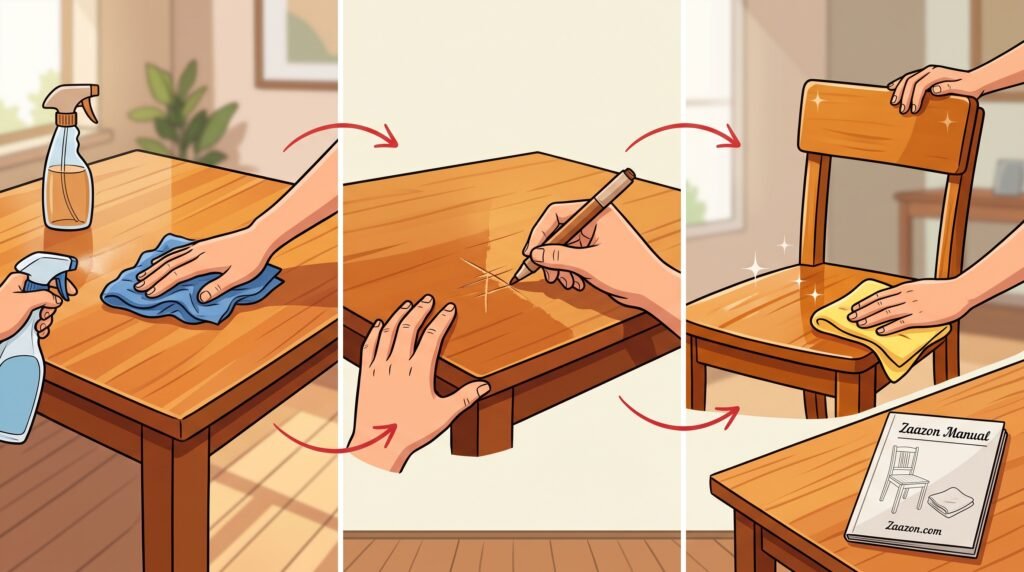
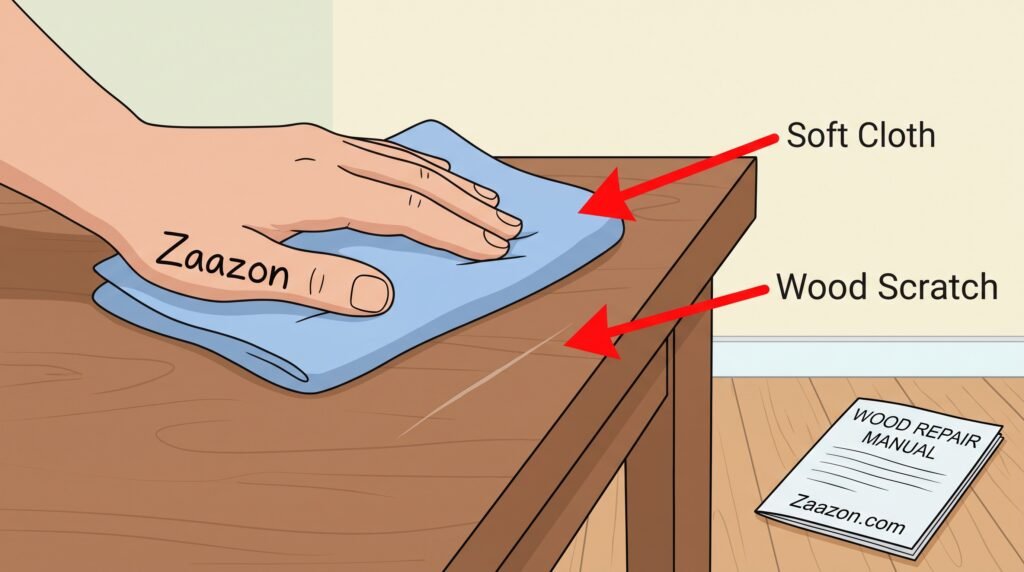
Before fixing any scratch, you must remove dust and dirt from the wood surface so your colors stick well.
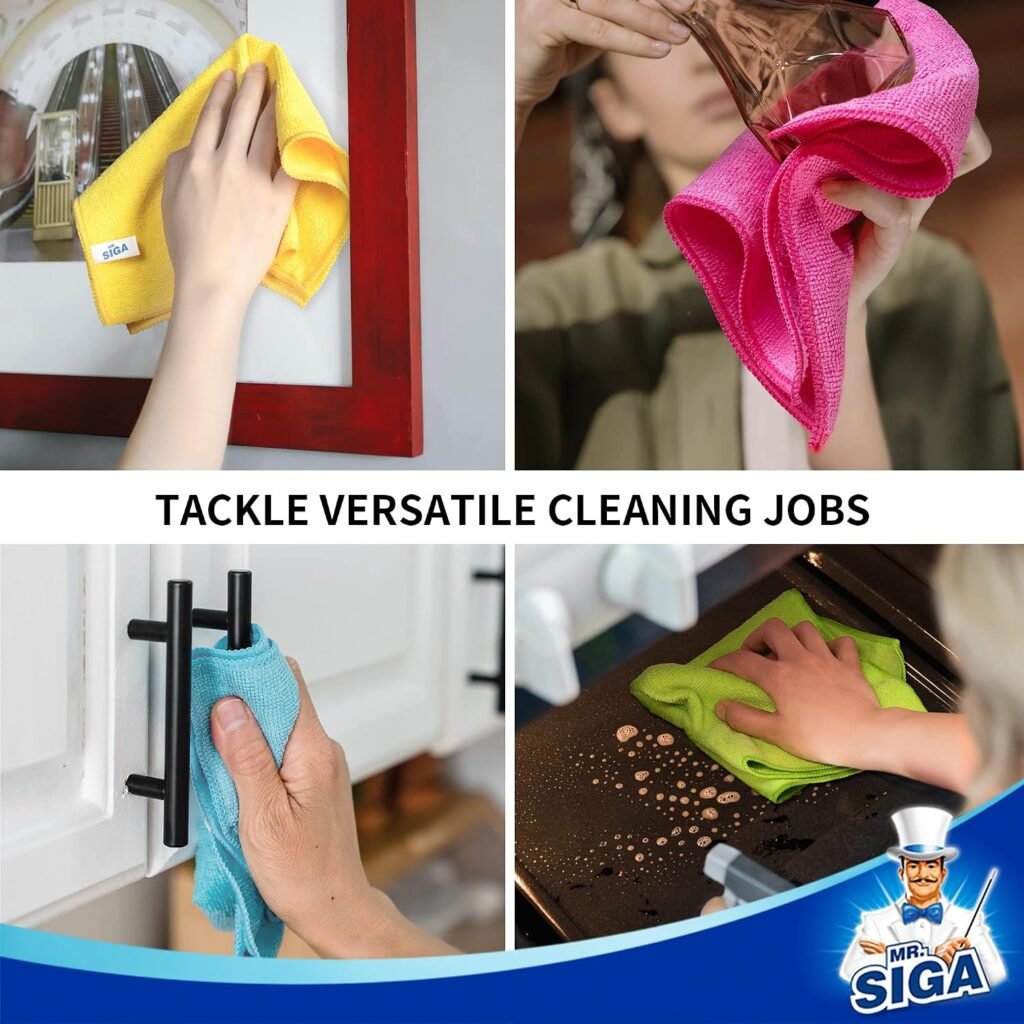
Take a soft dry microfiber cloth and wipe the wood top gently. Wipe away dirt, food crumbs, and dust from inside the scratch lines. A clean wood surface makes repair work very easy.
2. Rub a Raw Walnut Core Over Light Scratches
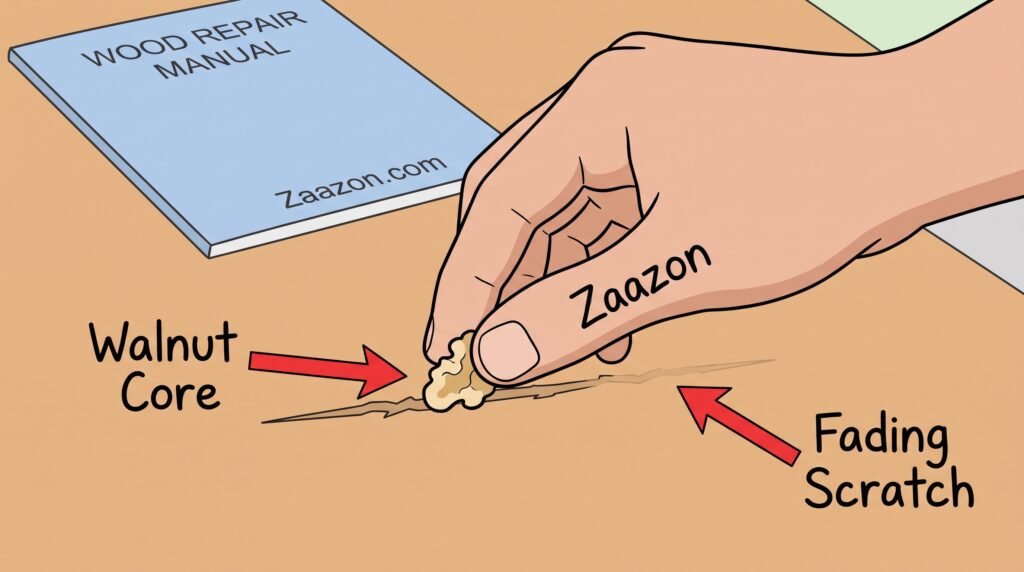
Natural walnut nuts contain rich natural oils that hide light surface scratches on brown wood quickly.
Crack open a fresh walnut shell and take out the soft nut core. Rub the nut core directly over the scratch line for twenty seconds. The natural oil warms up and darkens the scratch, making it disappear.
3. Color Light Lines with Wood Touch Up Markers
If the walnut trick does not hide the line completely, use a wood color marker pen that matches your table color.
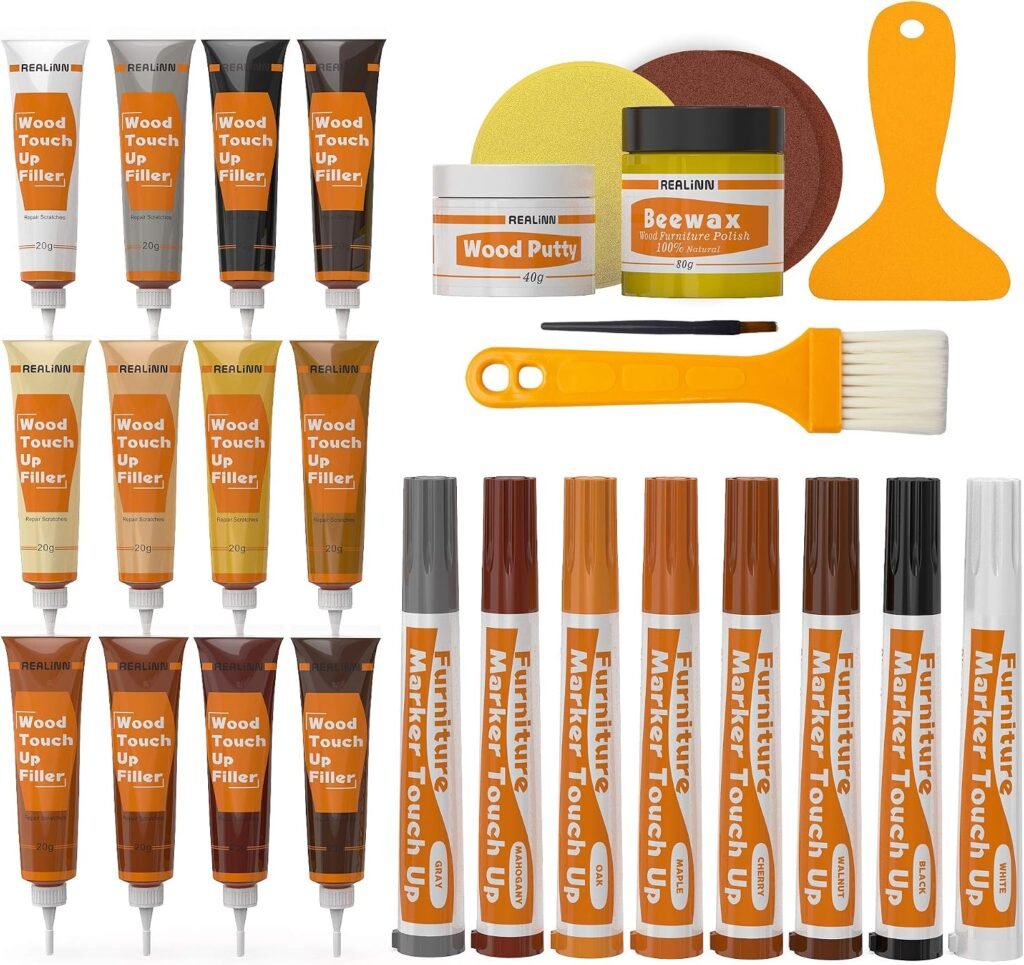
Pick a marker pen that has the same shade as your wooden table. Draw gently over the light scratch line. Use your thumb or a paper towel to blend the wet ink softly into the surrounding wood.

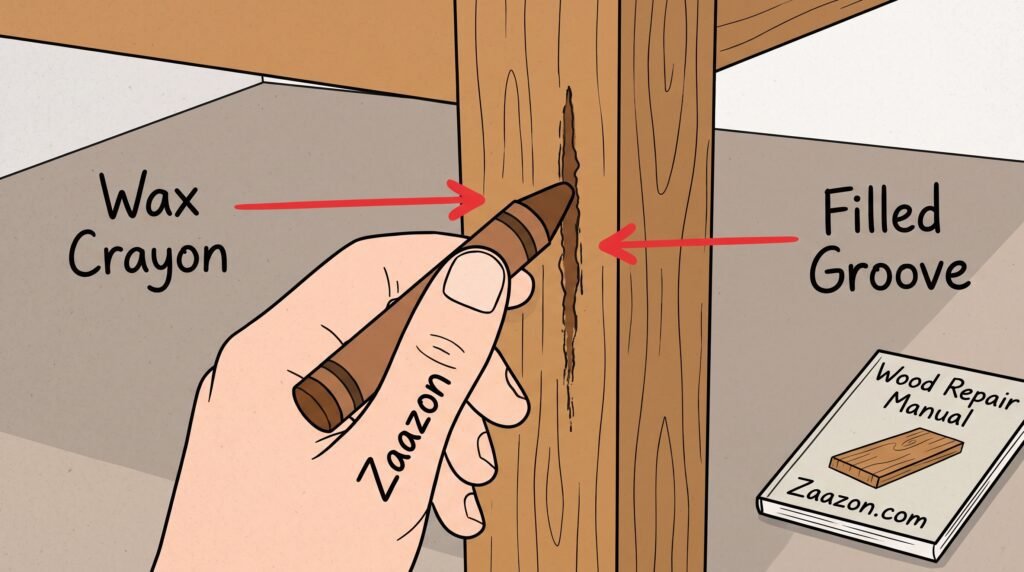
4. Fill Deep Scratches with Soft Wood Wax Crayons
Deeper scratches make hollow grooves in the wood that need soft colored wax to fill up the hole.
Select a wood wax crayon matching your furniture color. Press the wax tip firmly into the deep scratch line until the wax fills up the hollow groove. Wipe away extra wax around the line with a cloth.
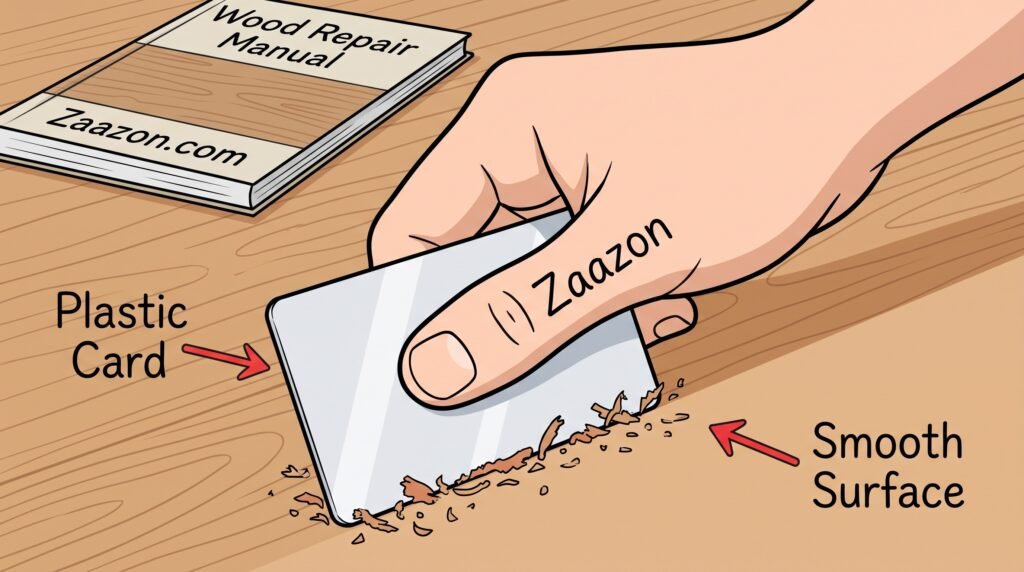
5. Smooth High Spots with a Soft Plastic Card
When you fill deep scratches with wax or paste, extra wax sits above the wood surface like a small bump.
Hold an old plastic card flat against the table. Slide the plastic edge gently over the repaired spot to scrape off extra wax. This leaves the wax fill completely flat with your table top.
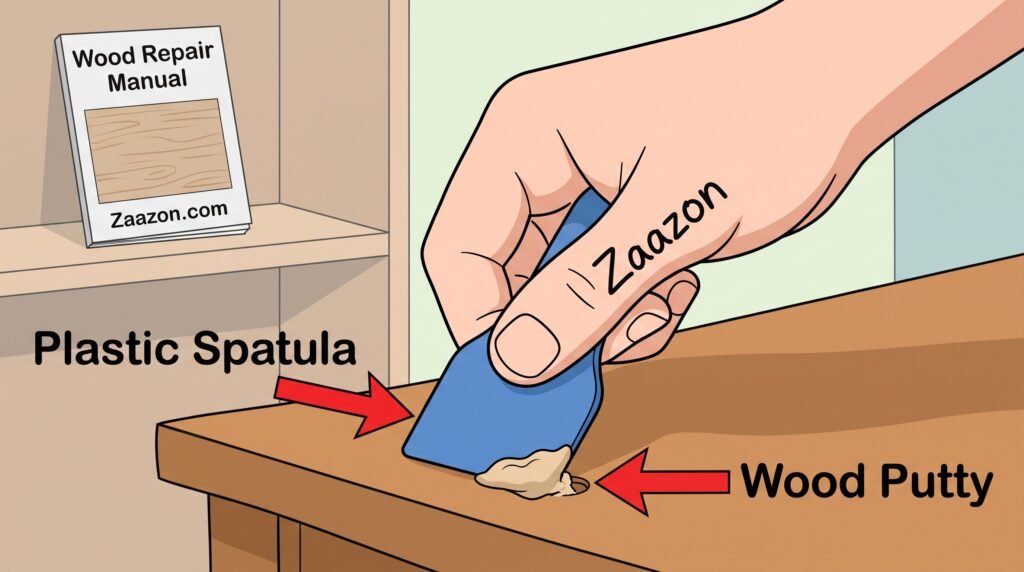
6. Apply Wood Filler Putty into Very Deep Holes
When a heavy object falls on your wood table, it leaves a big gouge that needs strong wood filler paste.
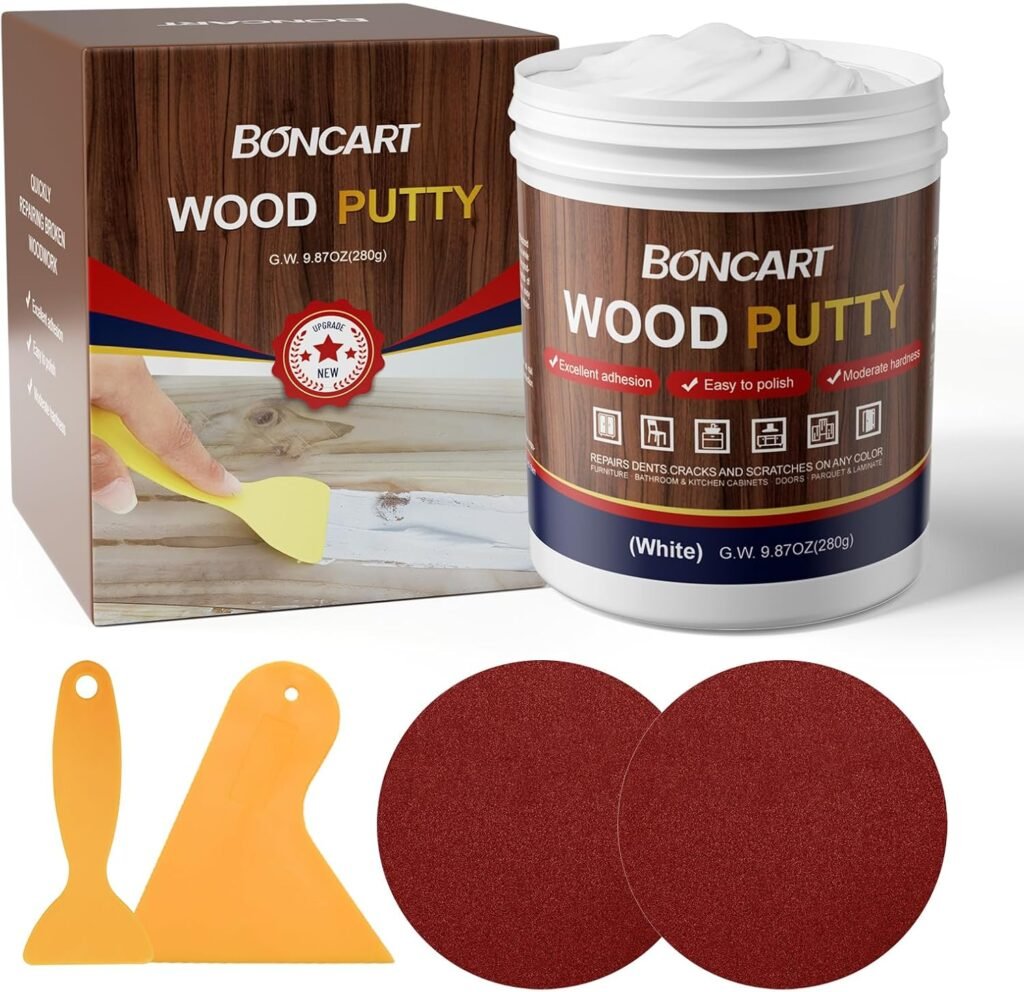
Scoop a small piece of wood putty paste on your finger or plastic knife. Push the paste deep into the hole. Let the paste dry for two hours until it turns hard like real wood.
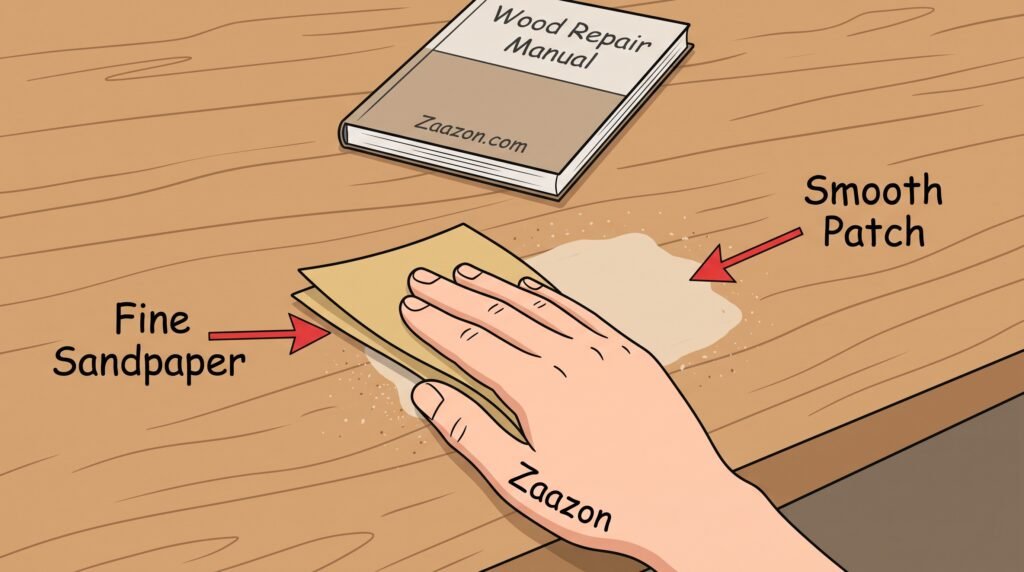
7. Sand Dry Wood Putty Gently with Fine Sandpaper
Once the wood putty dries completely, it feels rough and raised above the smooth table.
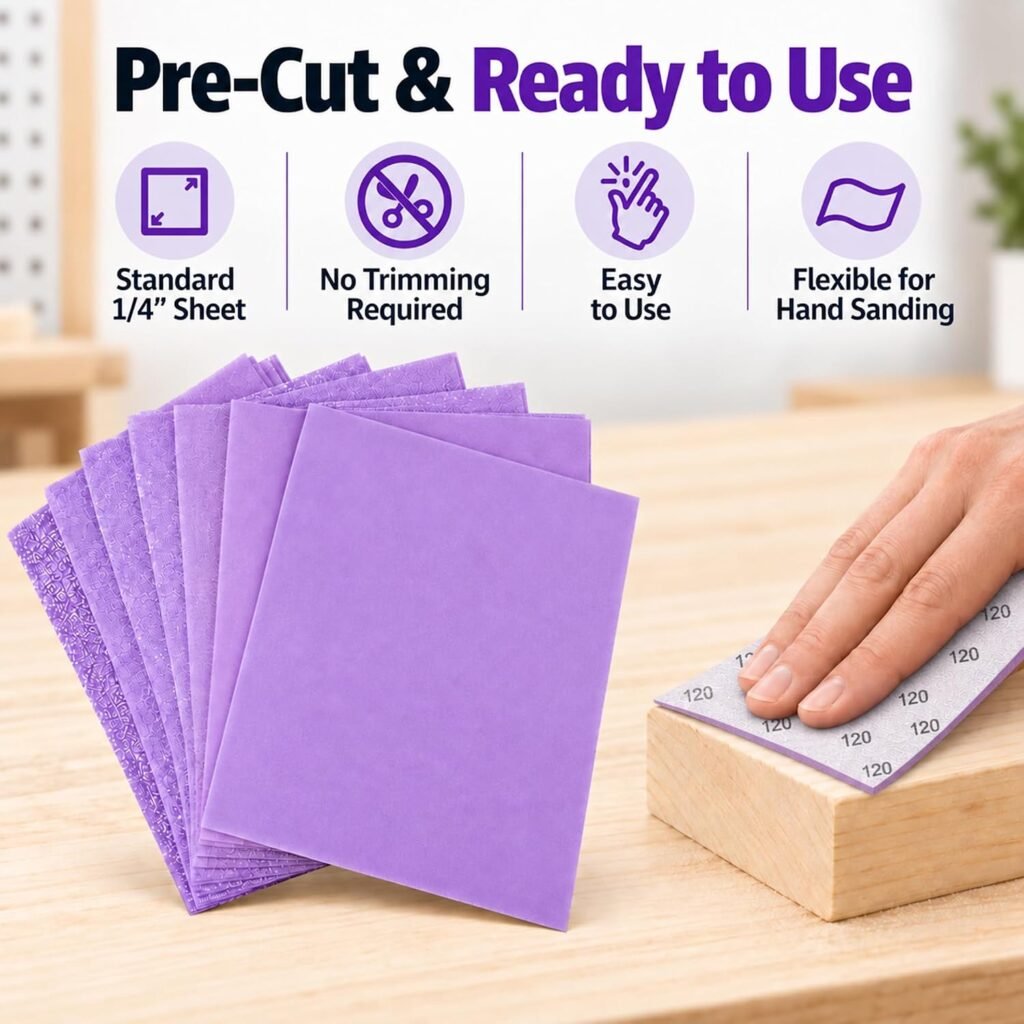
Take fine 220-grit sandpaper and rub the dry putty spot very lightly in small circles. Keep sanding until the dry putty feels completely smooth and level with the rest of your table.
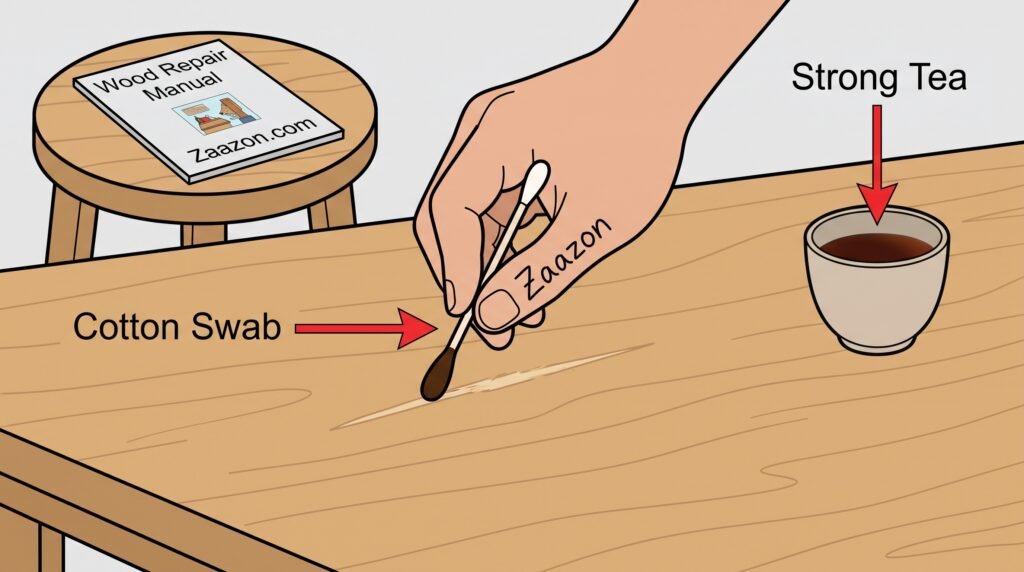
8. Mix Tea or Coffee for Natural Light Wood Stains
If you have light wood furniture, brewed black tea or instant coffee makes a wonderful natural stain.
Brew a strong cup of dark tea using warm water. Dip a cotton swab into the tea liquid and dab it onto the sanded wood spot. The natural tea color matches light wood shades perfectly.
9. Rub Olive Oil and Vinegar Solution for Shine
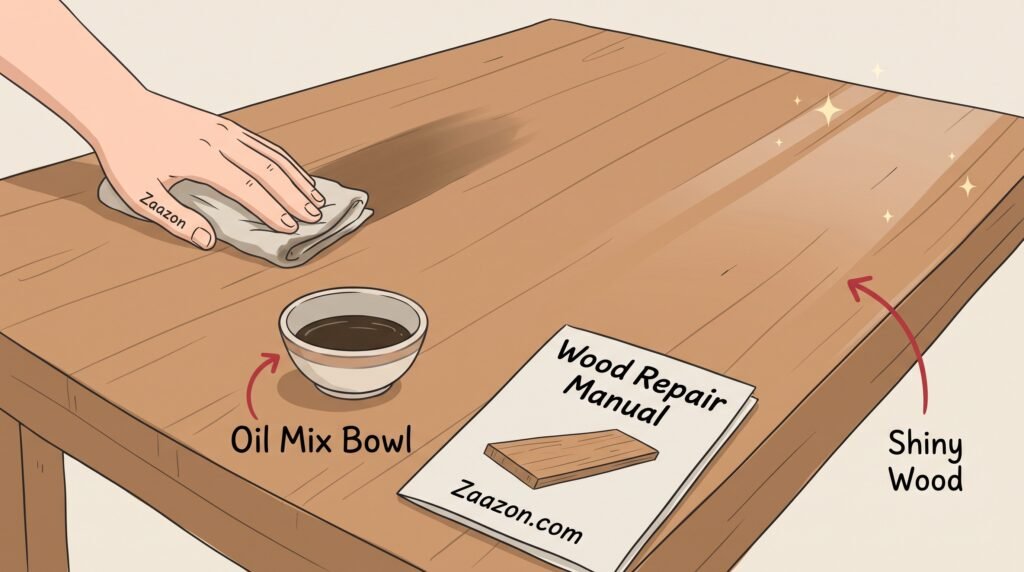
A simple mix of kitchen olive oil and white vinegar hides minor surface scuffs and feeds dry wood.
Mix two spoons of olive oil with one spoon of vinegar in a small bowl. Dip a soft rag into the oil mix and rub it over the scuffed wood in big circles. The scuffs fade away and the wood glows.
10. Seal Repaired Spots with Clear Wood Polish
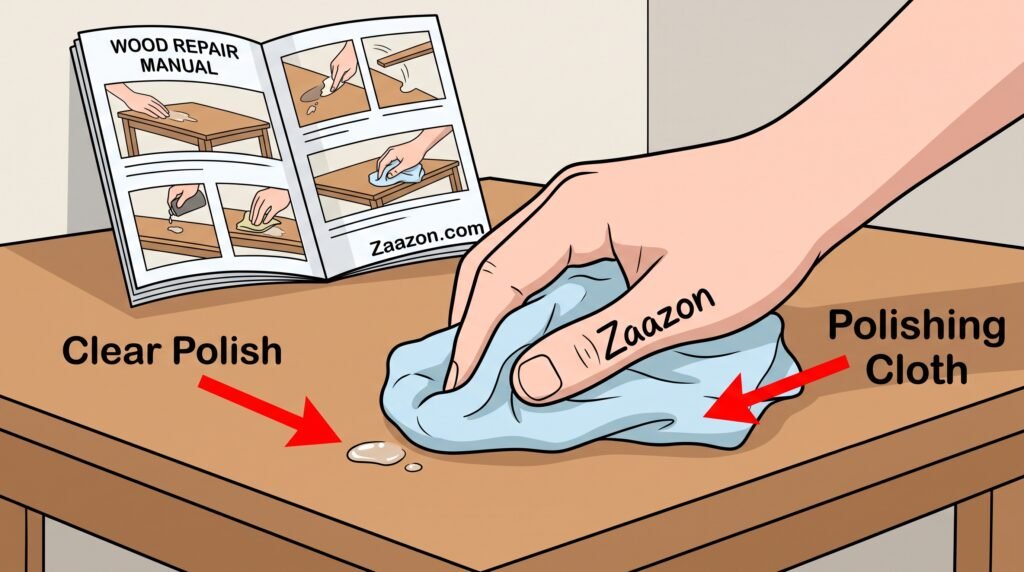
After coloring and filling your wood scratches, you must seal the spot so water cannot wash the color away.
Take clear wood polish spray or liquid shine. Apply a small drop over the repaired wood spot. Spread it softly with a clean rag to lock the color deep inside the wood grain.
11. Protect Wood Bases with Natural Beeswax
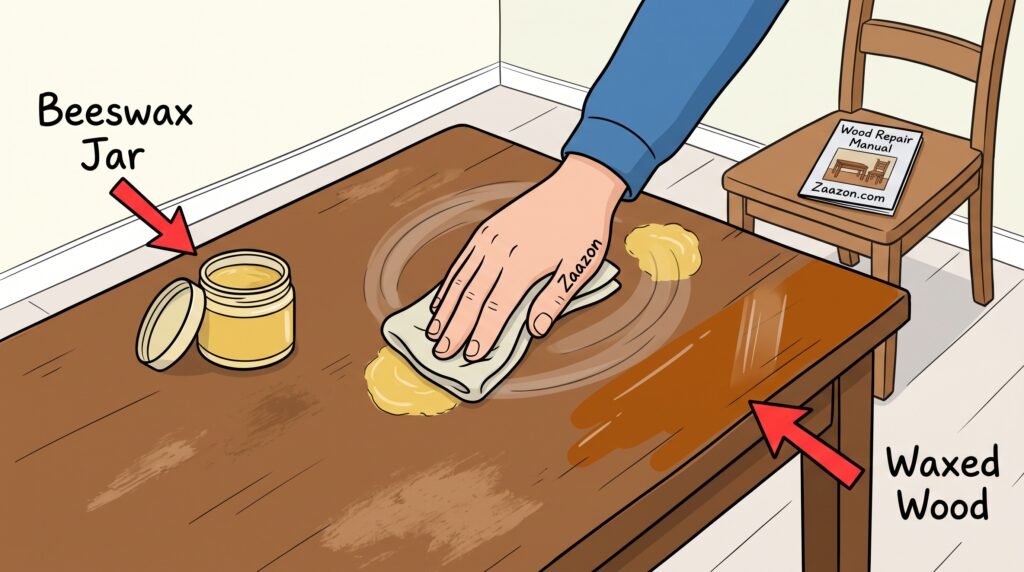
Natural beeswax makes a waterproof protective layer on your wood furniture, preventing future scratches from key rings.
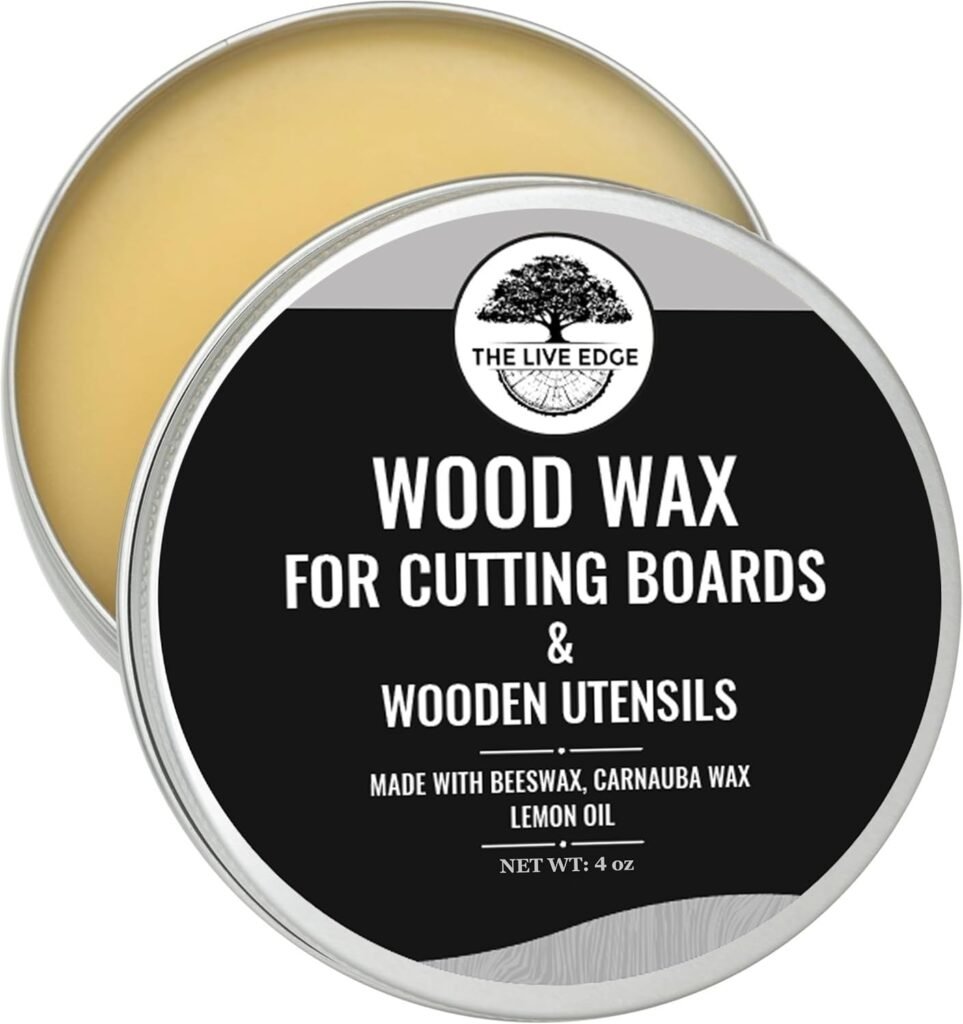
Scoop a little natural beeswax paste on a dry cotton rag. Rub the wax all over your table top using round circular arm movements. Let it sit for ten minutes to absorb into the wood.
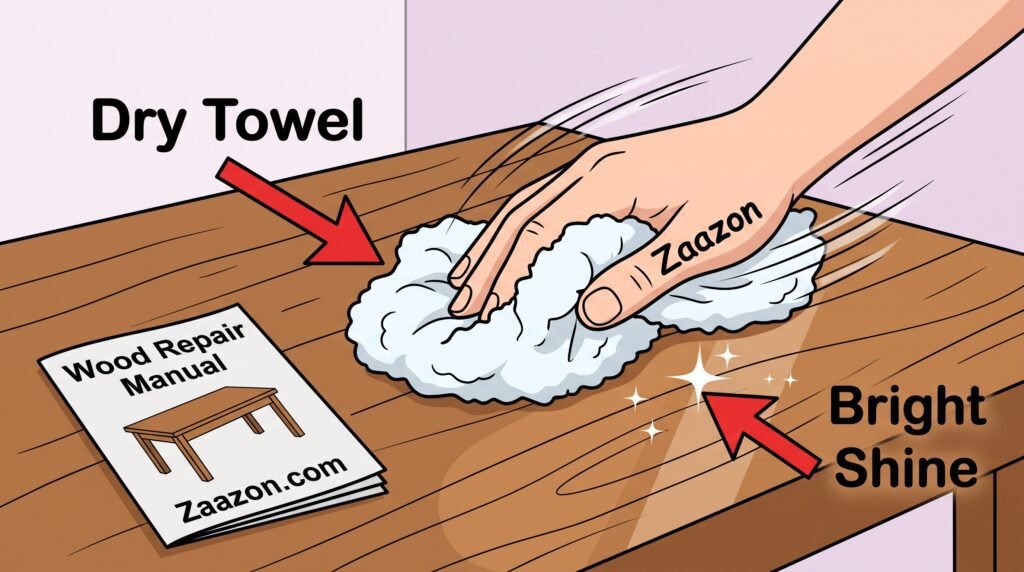
12. Buff the Waxed Wood with a Dry Towel
After applying beeswax, buffing the surface gives your wooden furniture a smooth, sparkling mirror-like finish.
Take a fresh, dry microfiber towel and rub the waxed wood surface quickly back and forth. Buffing removes extra dull wax and turns your furniture bright, clean, and shiny.
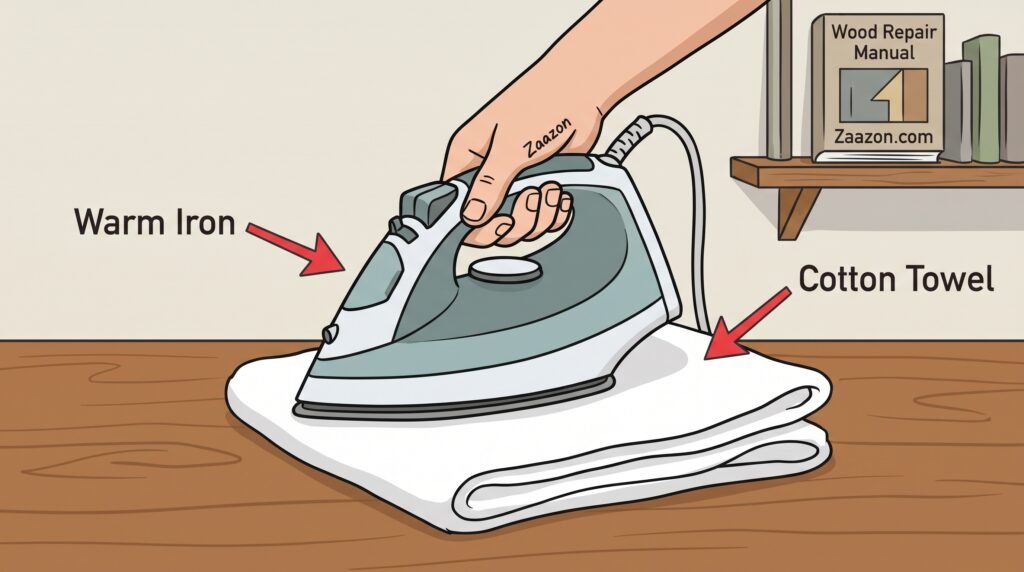
13. Fix White Heat Rings with a Warm Cloth and Iron
Putting hot teacups or hot plates directly on wood tables leaves ugly white cloudy moisture rings under the polish.
Place a clean dry cotton towel flat over the white cloudy ring. Pass a warm clothes iron set on low heat gently over the towel for ten seconds. The heat draws moisture out of the wood finish.
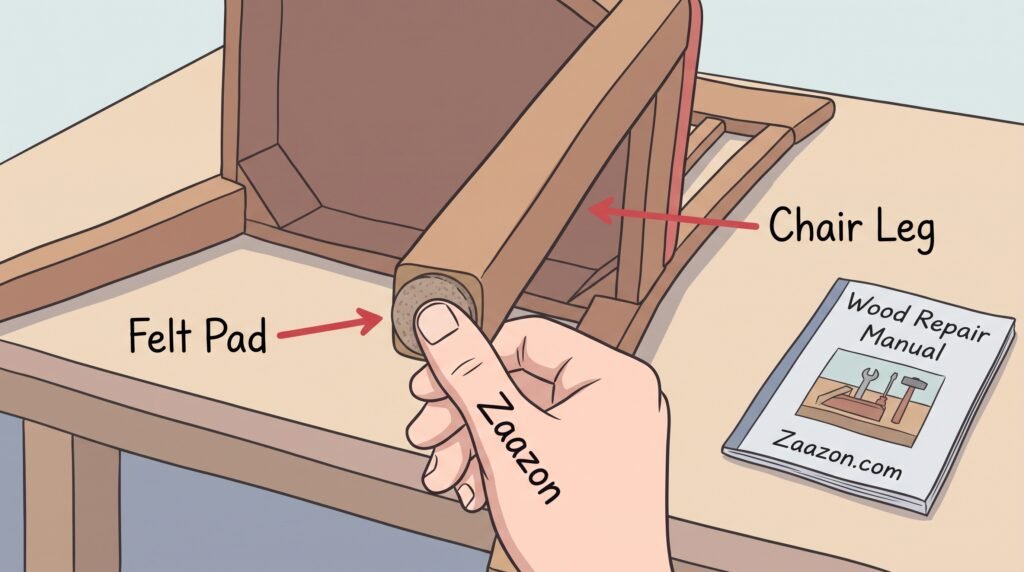
14. Stick Soft Felt Pads on Furniture Legs
Moving chairs and table legs across wood floors makes long drag scratches on chair legs and floor tiles.
Flip your chair upside down. Peel off the paper back of a soft round felt pad and stick it underneath each furniture leg. Now your chairs slide smoothly without making a single scratch.
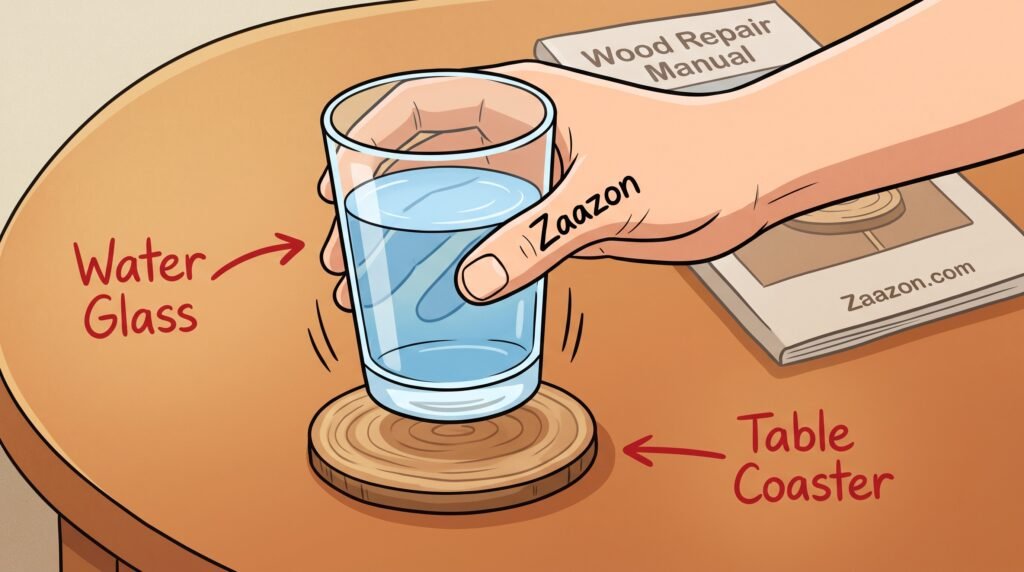
15. Use Coasters under Cups and Water Glasses
The best way to keep wooden furniture scratch free is to protect it before marks happen during daily home use.
Keep pretty cloth or wood coasters on your tables. Always place hot coffee cups, cold water glasses, and metal keys on coasters instead of putting them straight onto raw wood surfaces.